
Writing Is Ageless
You're never too old to develop your skills and your voice


As we age, we may lose our hair and our looks. We may have to slow down on our runs or gear down to a walk. We may have to lift less at the gym and abbreviate our daily schedules to accommodate our decreasing energy. But we can enhance our skills and find success as writers for the rest of our lives. When it comes to writing, age doesn’t matter.
In her essay Writing into Your Seventies and Beyond, Barbara DeMarco-Barrett quotes author Humphrey Trevelyan’s challenge to older writers:
It seems that two qualities are necessary if a great artist is to remain creative to the end of a long life: he must on the one hand retain an abnormally keen awareness of life, he must never grow complacent, never be content with life, must always demand the impossible.
To keep writing into our seventies, eighties, and beyond, Trevelyan observes, we must remain intellectually alive and settle for nothing less than the best from ourselves.
And we can do that. Our ability to create with words has no expiration date. Long into old age, we can dream our dreams and turn them into fiction; reflect on our lives and create captivating memoirs; tap into our accrued wisdom and express it in verse; or write dazzling commentary on world affairs or close-up reflections on life’s meaningful moments. As we age, we can keep writing.
Think about it. As we age, we accumulate life experiences and gain expertise in our career fields and other interests. Our gathered knowledge provides us with a storehouse of content to share. And, by the time we reach our later years, we have developed sophisticated thinking skills and a rich vocabulary. Our long lives have prepared us to write.
Besides the fact that we can continue to improve at it as we age, writing itself is good for us. It fosters our intellectual growth and creativity. It calms our minds and centers our attention, reducing stress the way that any mindfulness practice does. And the sense of accomplishment that comes from having written is unquestionably satisfying.
No matter your age, you never have to feel compromised as you place your thoughts on the page. As you grow older, your writing can get better and better.
Check out these books on the value of writing later in life.
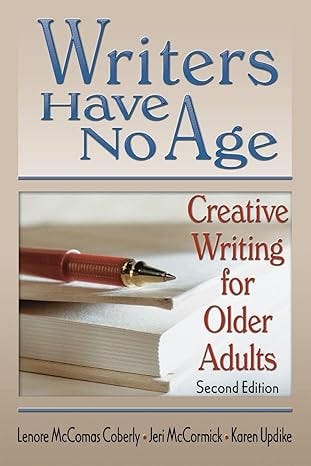
Now a classic, Karen Updike’s 2005 book Writers Have No Age tells us that “older writers though we are, we do get better at it all the time.”
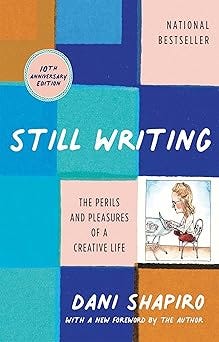
In her 2023 book Still Writing: The Perils and Pleasures of a Creative Life, author Dani Shapiro traces her own development as a writer and voices her determination to remain a storyteller in her later years.